UGC vs Influencer Marketing: The Marketing Battle Brands Can't Ignore
Imagine scrolling through Instagram.
You see a polished advertisement from a major brand.
A few seconds later, you see a creator casually talking about the same product from their bedroom.
Which one feels more trustworthy?
For most consumers, the answer is obvious.
The creator wins.
But here's where things get interesting.
Not all creator content is influencer marketing.
Some of it is actually UGC.
And while the two often look similar, they serve very different purposes.
Understanding that difference can save brands thousands in marketing spend and dramatically improve campaign performance.
First Things First: What Is UGC?
UGC stands for User-Generated Content.
It's content created by real people showcasing, reviewing, or using a product.
Unlike influencers, UGC creators don't necessarily post the content to their own audience.
Instead, brands purchase or license the content and use it in:
Social media ads
Landing pages
Product pages
Email campaigns
Website banners
Paid advertising
Think of UGC as modern-day customer testimonials - but far more engaging.
What Is Influencer Marketing?
Influencer marketing happens when creators promote products directly to their own audience.
The value comes from the trust they've built with followers.
When influencers recommend something, they're borrowing years of audience trust and transferring it to a brand.
This creates:
Brand awareness
Social proof
Community engagement
Website traffic
Product discovery
Influencers don't just create content.
They distribute it.
And that's a huge difference.
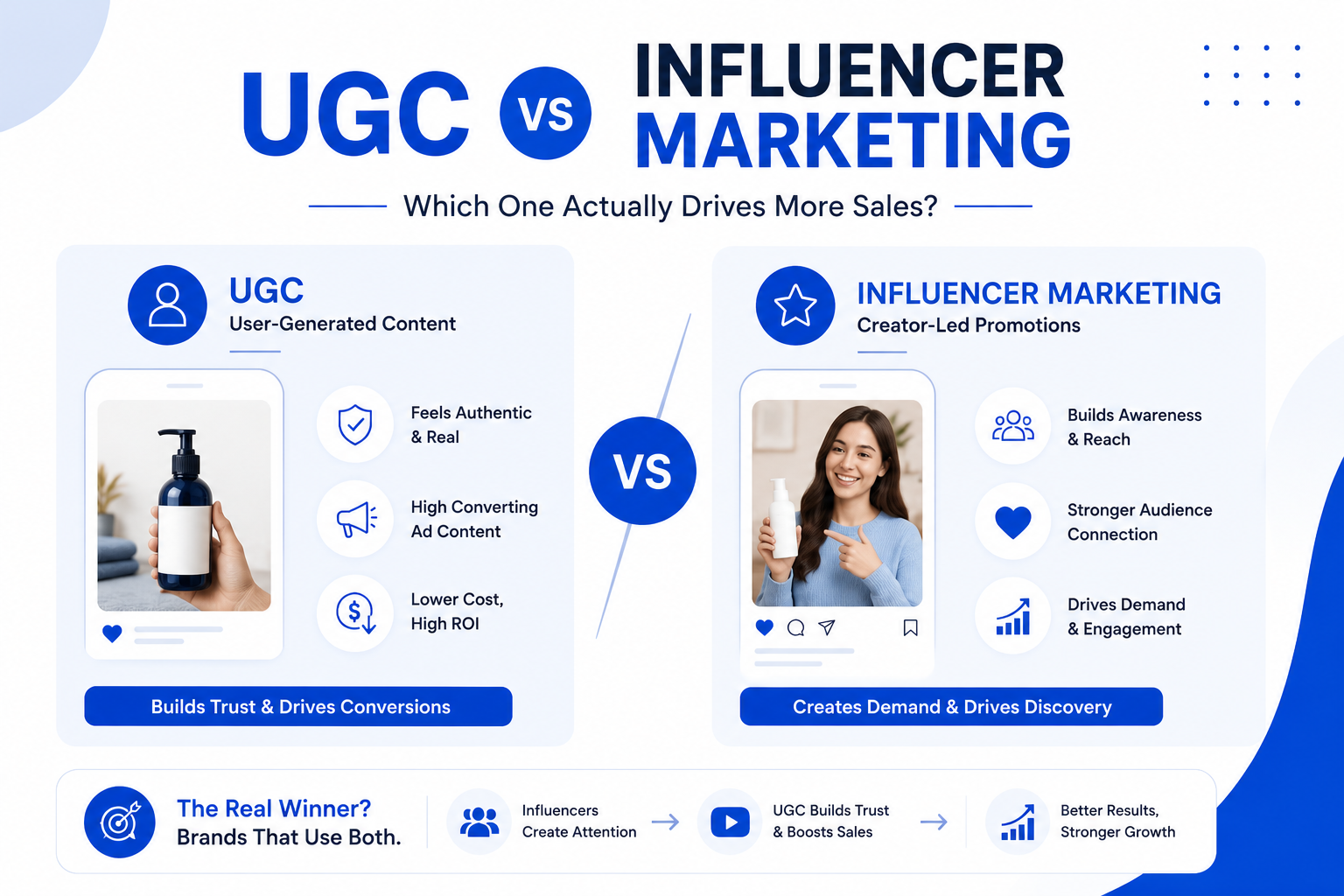
UGC Creates Content. Influencers Create Demand.
Here's the easiest way to understand it.
UGC answers:
"Does this product look trustworthy?"
Influencer marketing answers:
"Should I buy this product?"
One builds confidence.
The other drives attention.
The strongest brands understand that these strategies aren't competitors.
They're teammates.
Why Brands Are Investing Heavily in UGC
Traditional advertisements often feel scripted.
Consumers know they're being sold to.
UGC changes that.
Because it feels natural.
Real.
Authentic.
A creator filming on their phone often generates more trust than a studio-produced commercial costing thousands of dollars.
Brands love UGC because:
Production costs are lower
Content feels genuine
Ads often perform better
Multiple content variations can be created quickly
This is why UGC has become one of the fastest-growing marketing trends worldwide.
Why Influencer Marketing Still Dominates Awareness Campaigns
Imagine launching a new product.
Nobody knows it exists.
UGC alone won't solve that problem.
People need to discover the product first.
That's where influencers become powerful.
Influencers already have communities paying attention to their recommendations.
Instead of building trust from scratch, brands gain instant access to engaged audiences.
This makes influencer marketing ideal for:
Product launches
Brand awareness
Event promotions
New market entry
Community building
The Real Winner? Brands That Use Both
Many businesses ask:
"Should we choose UGC or influencer marketing?"
The better question is:
"How can we combine both?"
Here's an example.
Step 1:
Partner with influencers to introduce your product.
Step 2:
Generate engagement and audience interest.
Step 3:
Repurpose creator content into UGC assets.
Step 4:
Use those assets in paid advertising campaigns.
Now you're benefiting from both influence and content.
This creates a powerful marketing ecosystem.
Why Consumers Trust Creators More Than Brands
Modern buyers don't trust advertising the way previous generations did.
They trust experiences.
Reviews.
Recommendations.
Proof.
Creators provide all three.
Whether through UGC or influencer campaigns, creator-led marketing helps brands appear more human.
And human brands sell more effectively.
How Influsage Helps Brands Access Both Opportunities
One of the biggest challenges for brands is finding the right creators.
Some campaigns need influencers.
Others need content creators.
Many require both.
Influsage simplifies the process by connecting brands with creators who can support multiple campaign objectives.
Whether you're looking to build awareness, generate content, increase engagement, or improve conversion rates, finding the right creator becomes faster and more strategic.
The Future of Marketing Is Creator-Led
Consumers are spending less time trusting advertisements and more time trusting people.
That's not changing anytime soon.
Brands that adapt will thrive.
Brands that continue relying solely on traditional marketing will struggle to maintain attention.
The future belongs to creator-led marketing.
The only question is how quickly brands are willing to embrace it.