Why Most Influencer Campaigns Fail Before They Even Launch
A brand finds an influencer.
Approves the budget.
Launches the campaign.
And waits for results.
A few weeks later?
Low engagement.
Poor conversions.
Minimal ROI.
Most brands blame the influencer.
But the reality is different.
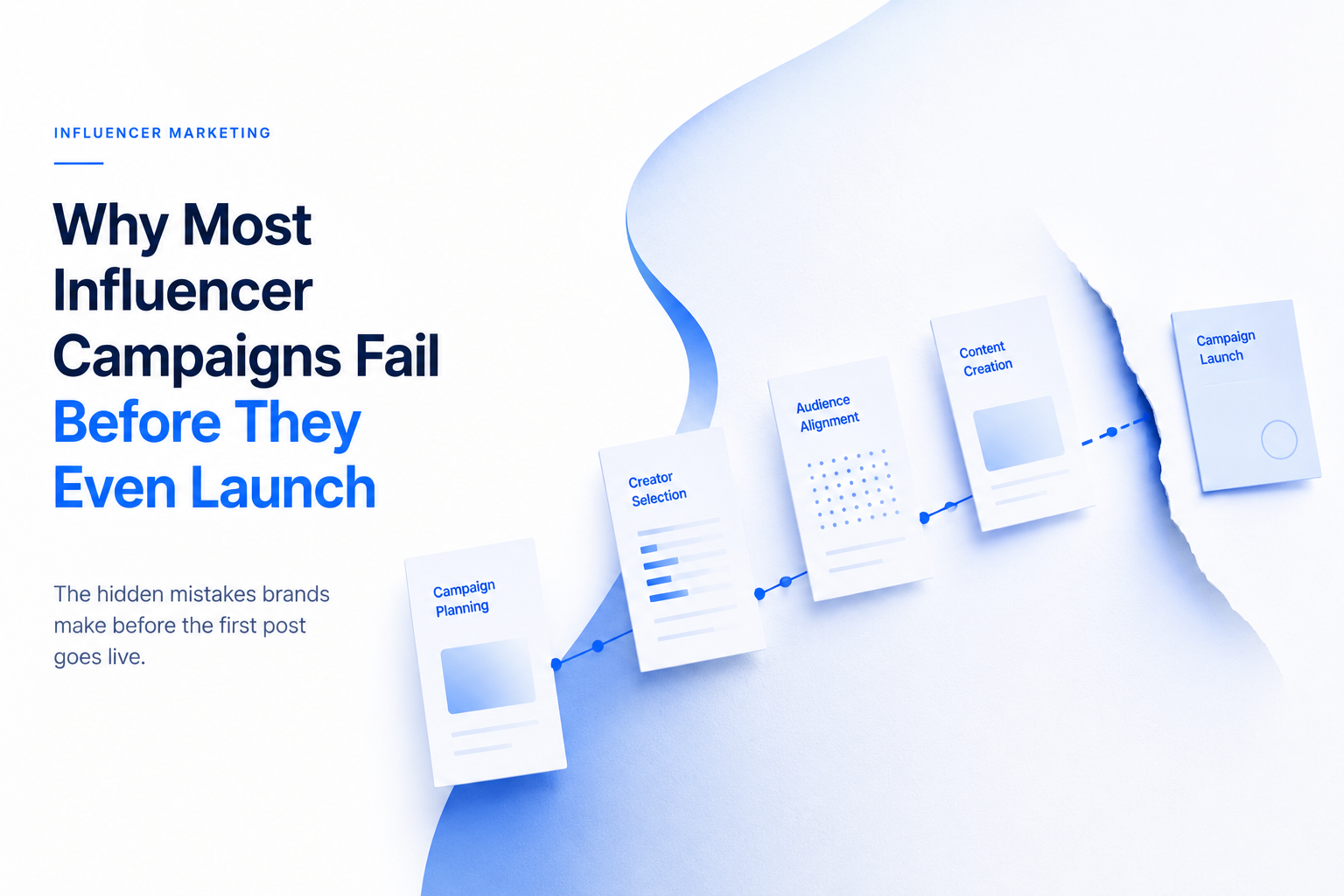
Most influencer campaigns fail long before the first post goes live.
Let's look at why.
1. Choosing Influencers Based on Followers
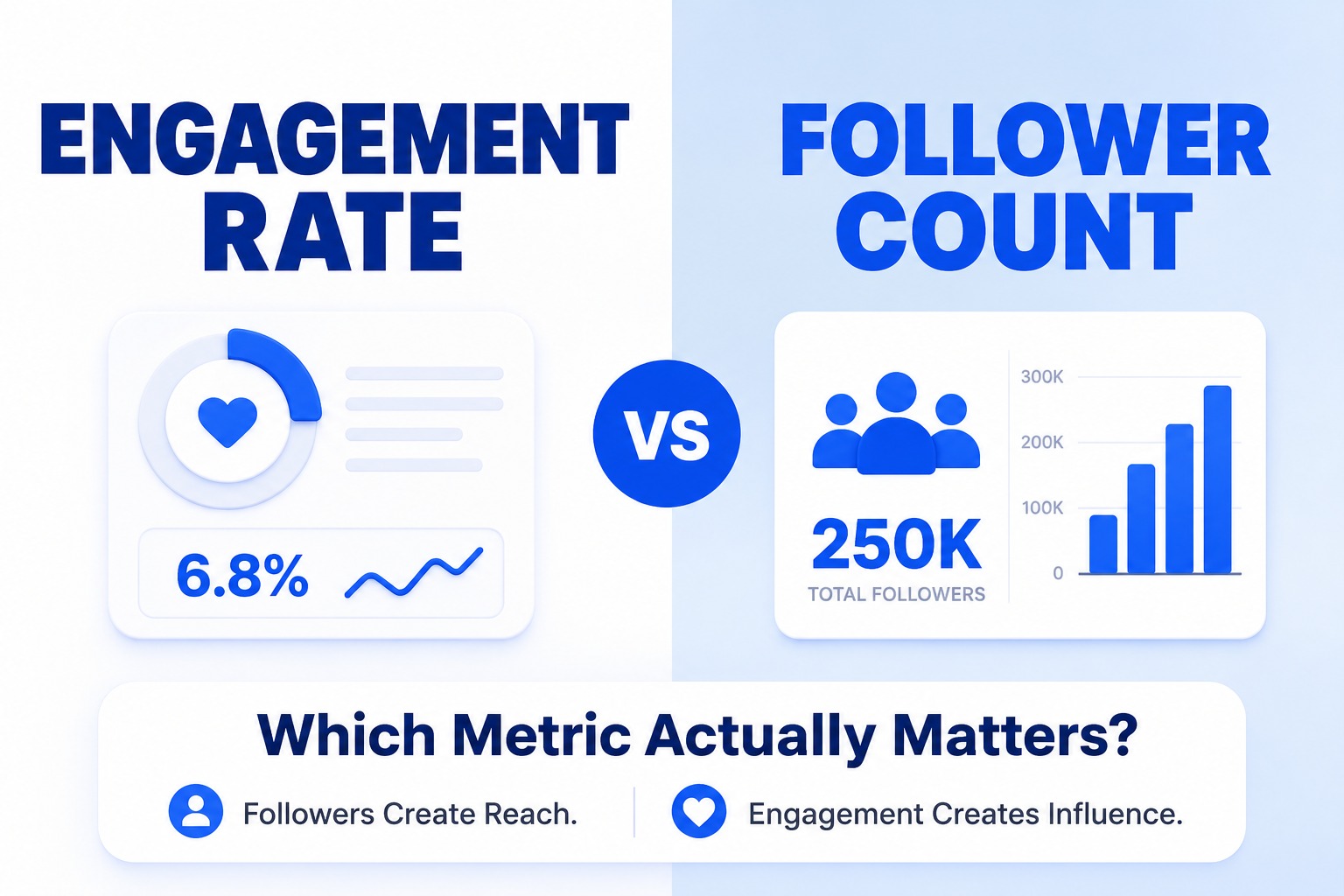
One of the biggest mistakes brands make is assuming more followers mean better results.
They don't.
A creator with 50,000 highly engaged followers can often outperform someone with 500,000 followers.
What matters is:
Audience relevance
Engagement quality
Trust
Content performance
The right audience always beats the bigger audience.
2. No Clear Campaign Goal
Many campaigns start with a simple objective:
"Let's do influencer marketing."
That's not enough.
Before working with creators, brands need to define success.
Are you looking for:
Brand awareness?
Website traffic?
Leads?
Sales?
Without clear goals, measuring performance becomes impossible.
3. Poor Creator-Brand Fit
A creator can produce amazing content and still be the wrong fit.
For example, a skincare brand partnering with a gaming creator is unlikely to see strong results.
The best campaigns happen when the creator, audience, and product naturally align.
Authenticity matters.
4. Overly Scripted Content
Many brands want complete control over the content.
They provide detailed scripts and strict instructions.
The problem?
Followers don't engage with advertisements.
They engage with creators.
When content feels forced, performance drops.
The best campaigns provide direction while allowing creators to speak in their own voice.
5. Ignoring Audience Quality
Follower count tells only part of the story.
Brands should also evaluate:
Audience demographics
Engagement quality
Comment authenticity
Audience location
A large audience means little if it's not the audience you're trying to reach.
Why Successful Brands Get Better Results
Brands like Nike, Adidas, and Nykaa don't choose creators based solely on popularity.
They focus on:
Audience alignment
Brand fit
Content quality
Long-term partnerships
That's why their campaigns consistently perform better.
How Influsage Helps
One of the biggest challenges in influencer marketing is finding the right creators.
Influsage helps brands discover influencers based on relevance, engagement, and audience quality—not just follower count.
This helps brands make smarter decisions before campaigns launch.
Because successful influencer marketing starts long before the first post goes live.
Final Thoughts
Most influencer campaigns don't fail because influencers are ineffective.
They fail because brands make mistakes during planning.
Choosing creators based on followers.
Ignoring audience quality.
Setting unclear goals.
Over-controlling content.
The brands that focus on strategy before launch are the ones that see the best results.
And in influencer marketing, the right decisions made early can make all the difference.